 Chat on WhatsApp




PM exam format (Sept 2026 to June 2027 study guide)
| Section | What is in it | Marks |
|---|---|---|
| A | 15 objective test (OT) questions, 2 marks each | 30 |
| B | 3 OT cases. Each case has 5 questions of 2 marks on one scenario | 30 |
| C | 2 constructed response questions, 20 marks each | 40 |
| Total | 3 hours, all questions compulsory | 100 |
| Pass mark | 50% | 50 |
You get an extra 10 minutes before the start to read the exam instructions. A formulae sheet is provided, and it includes the demand function and marginal revenue formulae. You answer Section C using the spreadsheet and word-processing tools inside the CBE.
What the PM syllabus covers
- A. Management information systems and data analytics: the information a business uses and how data is analysed. This includes descriptive, diagnostic, predictive and prescriptive analytics.
- B. Specialist cost and management accounting techniques: specialist costing methods. This includes environmental management accounting: life-cycle costing, input-output analysis, flow cost accounting and ABC.
- C. Decision-making techniques: using cost and revenue data to make business decisions, such as setting prices.
- D. Budgeting and control: preparing budgets and analysing variances, including material mix and yield variances.
- E. Performance measurement and control: measuring how a business and its divisions perform. This includes transfer pricing, now with objectives and multinational companies added.
- F. Employability and technology skills: working in the CBE spreadsheet and word processor, moving between windows and presenting data.
Where marks are lost in PM
- In a performance analysis question, calculate at least two measures for each dimension. Then say whether each one shows good or poor performance and give a reason from the scenario. In the 14-mark Gnosh Co question on the Building Block model, weak answers calculated only one or two measures or stuck to one dimension. Answers that only restated a figure without judging it earned little. Two calculations with a detailed comment for each dimension was enough to score very well (examiner's report, March/June 2026)
- Answer only what the requirement asks. In Gnosh (b), worth 6 marks, it was common for candidates to spend time on the existing ROCE-based system, which the question did not ask about. The examiners suggest taking ownership, achievability and fairness one at a time, so the requirement becomes three 2-mark questions. Put each point under the right heading. Controllability belongs under ownership. Fairness here meant consistency across the coffee shops (examiner's report, March/June 2026)
- Apply pricing theory to the scenario. In Bamburgh (b), worth 3 x 4 marks, candidates could generally explain complementary product pricing, market skimming and price discrimination. A significant number did not use the scenario or used it wrongly. The marks were for points such as contracts for spare parts, maintenance and repairs, a unique product protected by patents, and different price elasticity between countries. Discussing a different pricing strategy earned no marks (examiner's report, March/June 2026)
- Do your calculations in the CBE spreadsheet. In the Bamburgh pricing question, the most common mistake was giving one total instead of a table by price point. Without the table, candidates could not work out marginal revenue and marginal cost, and the profit-maximising price became very hard. Candidates who built a table with simple formulae often got full marks. Typing in values instead of using formulae hides workings that can earn partial marks. Rounding errors also cost marks, for example 5.67% cut to 5.6% instead of rounded to 5.7% (examiner's report, March/June 2026)
How our PM mocks work
- Pick your plan: Every Chapter Test Series (a test for every chapter and 2 full mock exams), Part-wise Test Series (5 part tests and 2 full tests), Full Syllabus Mock Tests (2 full tests) or Every Chapter Series + Mentor. All questions are original, written by our faculty in the current exam pattern, not ACCA past papers.
- The questions are original. They are not ACCA past papers.
- You attempt each mock under timed conditions and upload your answers.
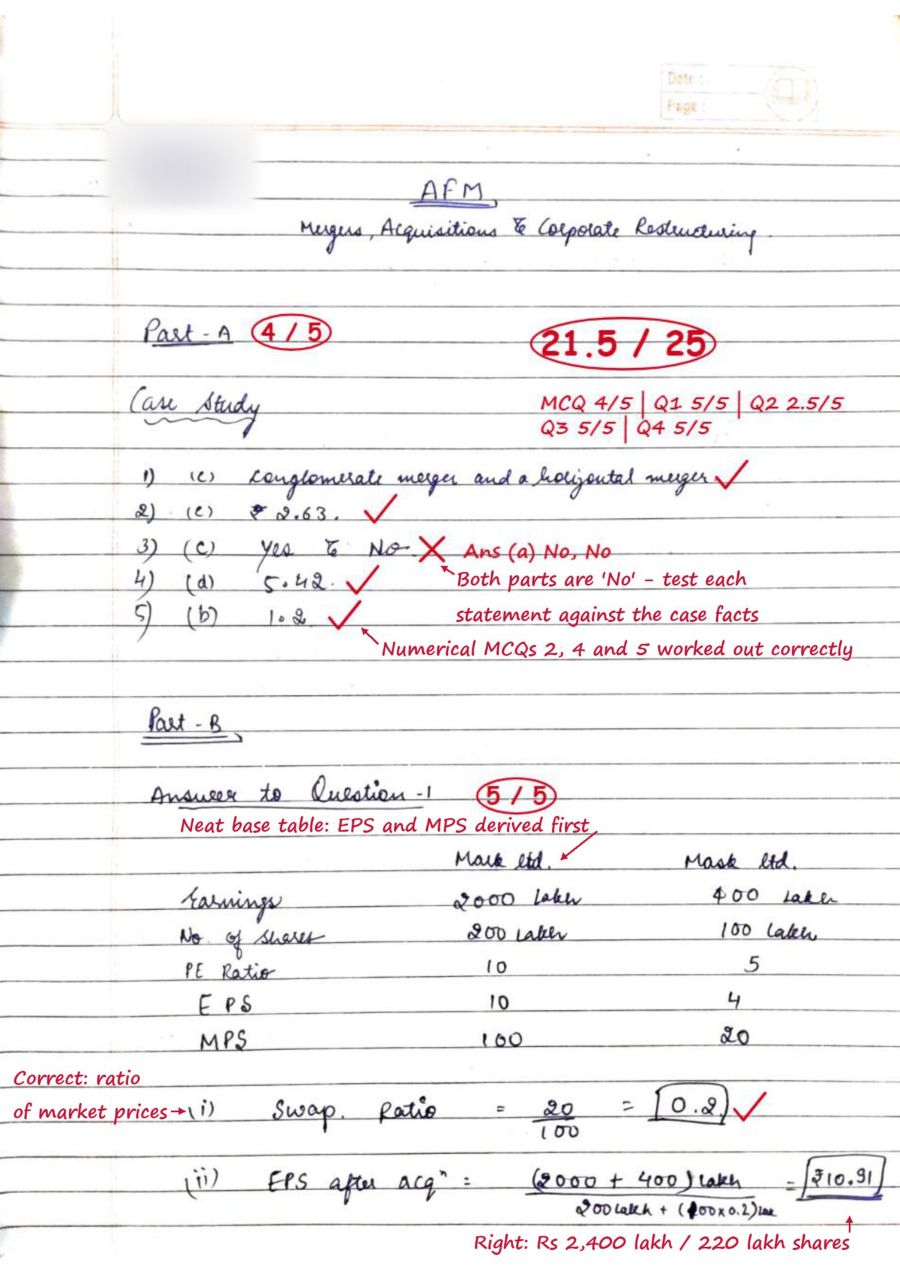
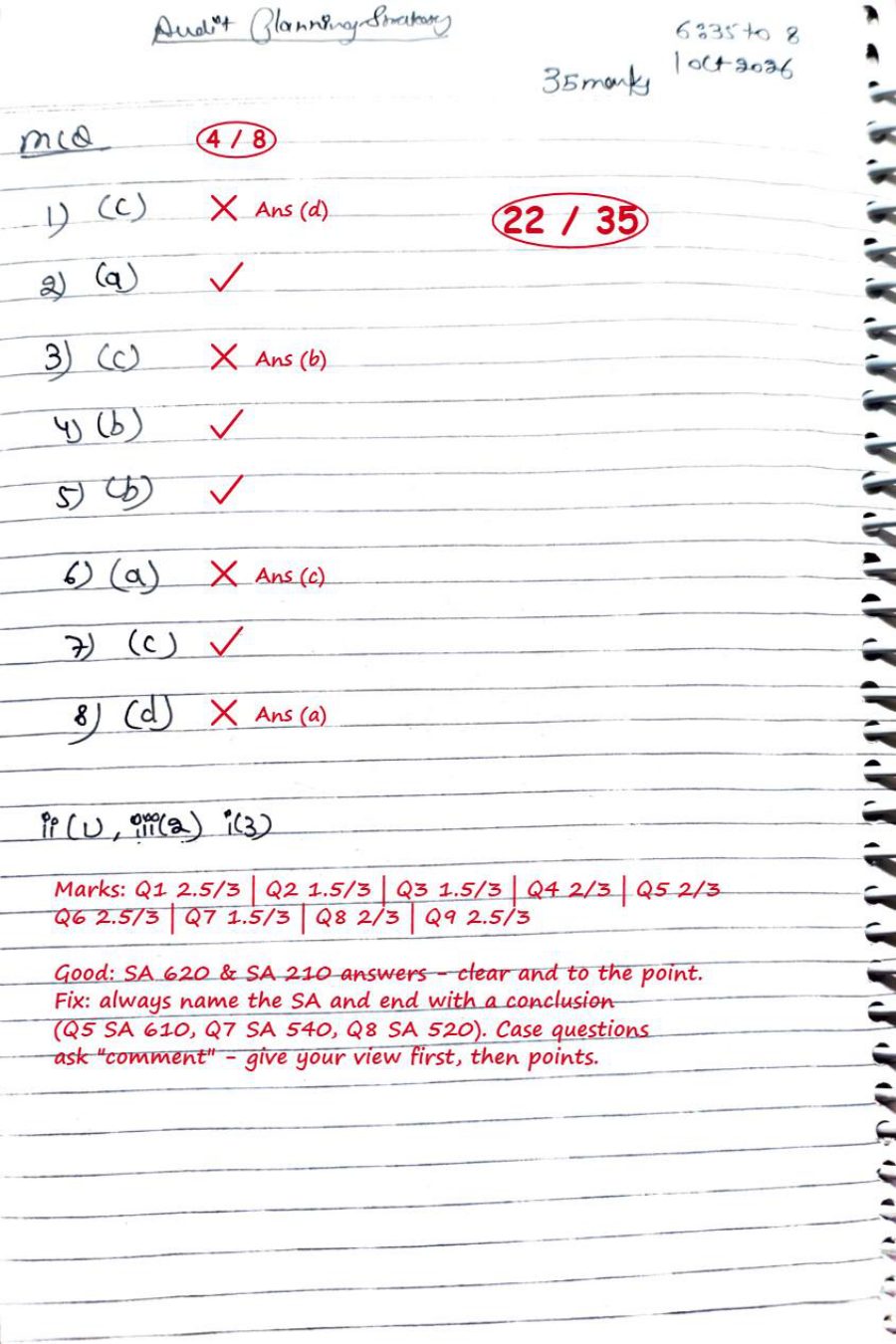
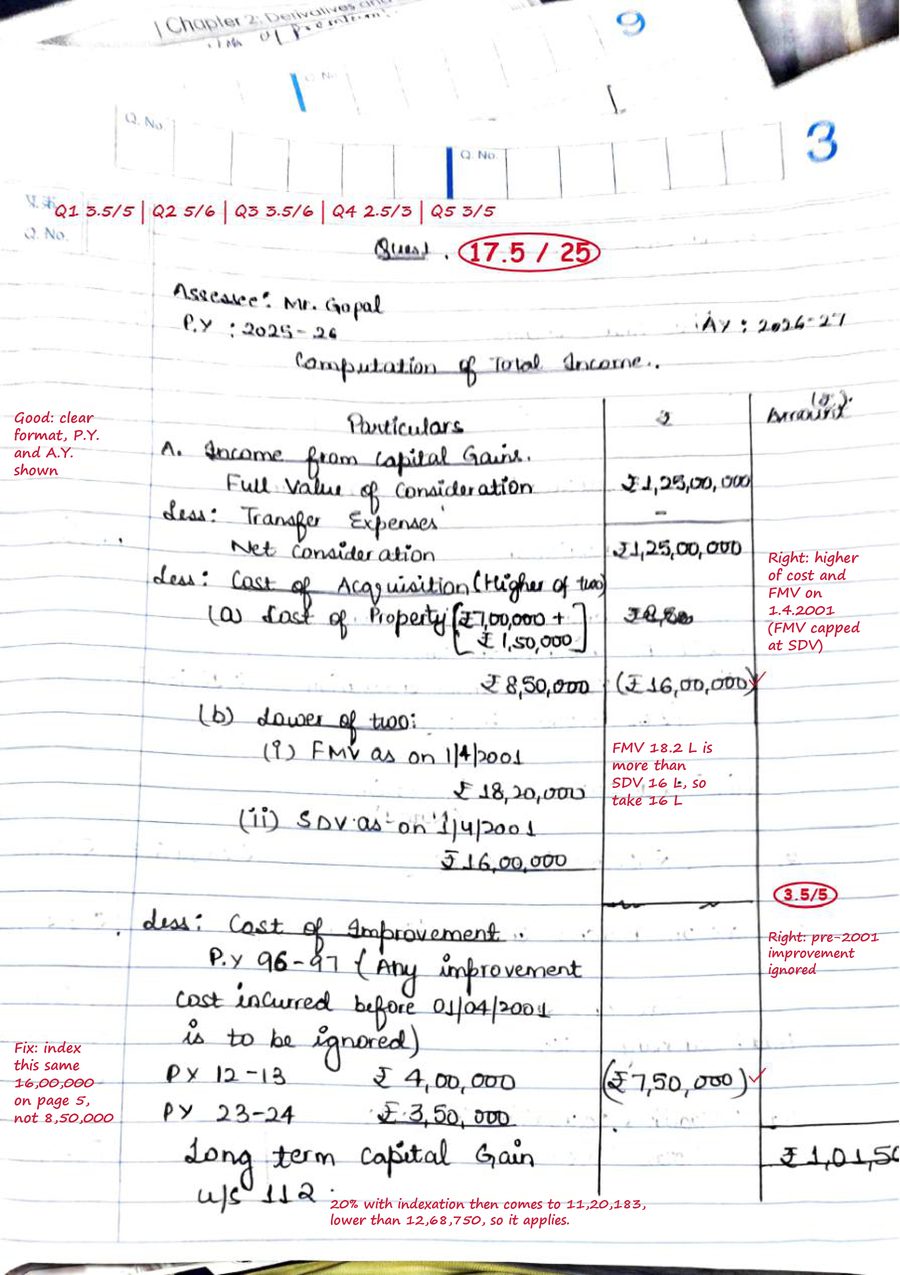
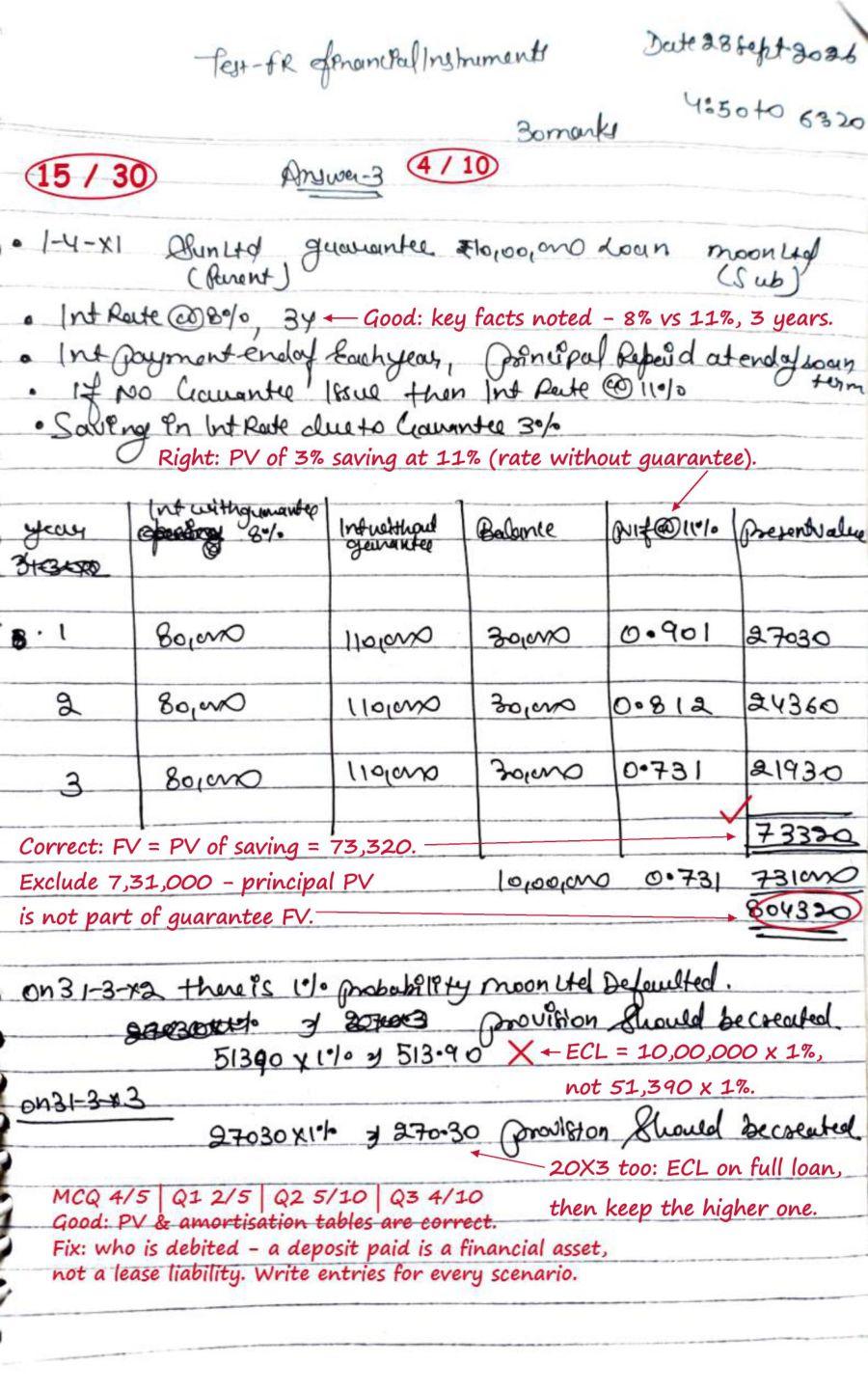
- Our faculty check your mock within 48 hours of upload. You get marks for each question and comments on what cost you marks. Our faculty also answer your doubts on the checked mock.
- On the Every Chapter Series + Mentor plan, a mentor builds a week-by-week plan to your sitting and reviews your mock results with you.
What happens to PM in September 2027?
June 2027 is the last sitting of the current PM exam. From September 2027, ACCA's new structure brings in E5 Performance with Data Analysis in place of PM. If you pass PM by June 2027, that pass carries across as credit.