 Chat on WhatsApp




AA exam format (Sept 2026 to June 2027 study guide)
| Section | What you answer | Marks |
|---|---|---|
| Section A | 3 case-based questions of 10 marks each. Each case has five 2-mark objective test (OT) questions. | 30 |
| Section B | 1 question of 30 marks and 2 questions of 20 marks | 70 |
| Total | All questions are compulsory | 100 |
| Pass mark | 50% | 50 |
| Time | 3 hours, computer-based. You also get 10 minutes to read the exam instructions before the exam starts. |
Section B will mostly test planning and risk assessment, internal control or audit evidence. Questions from other syllabus areas can still come. The study guide has no syllabus changes for September 2026 to June 2027, and regulations issued by 31 August 2025 are examinable.
What the AA syllabus covers
- A. Audit framework and regulation: what an audit is, external audits, corporate governance, and ethics under ACCA's Code of Ethics and Conduct.
- B. Planning and risk assessment: accepting clients, understanding the entity, audit risk, fraud and laws, and audit planning and documentation.
- C. Internal control: control systems, tests of controls, reporting control deficiencies, and internal audit.
- D. Audit evidence: assertions, audit procedures, sampling, audit of specific items, automated tools, using the work of others, and not-for-profit bodies.
- E. Review and reporting: subsequent events, going concern, written representations, final review, and the auditor's report.
- F. Employability and technology skills: using the exam's spreadsheet and word-processing tools and presenting your answer well.
Where marks are lost in AA
- Define terms exactly and name the balance in audit risk answers. Many candidates defined inherent risk as being due to the nature of the business and got no credit. Listing the three parts of audit risk earned at most 1 of 4 marks. In the 16-mark audit risk question, "property, plant and equipment could be overstated" scored, but "assets could be overstated" did not. "Discuss with management" scored nothing. The new-client risk was the one candidates spotted least. (examiner's report, March/June 2026)
- Read the requirement words before you write. When substantive analytical procedures were asked, tests of detail got no credit. Fluctuations had to be investigated, not just pointed out. Answers on sales tax in general, instead of the year-end sales tax liability, scored nothing. Receivables confirmations scored nothing where the scenario said none would be done. (examiner's report, March/June 2026)
- Know the difference between a control objective and a control procedure. Many wrote "ensure purchases are authorised" when objectives were asked and got no marks. Each deficiency needs a specific impact on the business, not a general "fraud or error". A recommendation that starts with "ensure that" or just reverses the deficiency is unlikely to score. (examiner's report, March/June 2026)
- Make substantive procedures detailed and name the source document. A 5-mark part needs 5 such tests, which is about 9 minutes at 1.8 minutes a mark. Vague, rote-learnt tests and tests of control mixed in lost marks. On auditor's reports, "qualified report" and "the auditor's report is modified" scored nothing, because it is the opinion that is modified. (examiner's report, March/June 2026)
How our AA mocks work
- Pick your plan: Every Chapter Test Series (a test for every chapter and 2 full mock exams), Part-wise Test Series (5 part tests and 2 full tests), Full Syllabus Mock Tests (2 full tests) or Every Chapter Series + Mentor. All questions are original, written by our faculty in the current exam pattern, not ACCA past papers.
- You attempt each mock under timed conditions and then upload your answers.
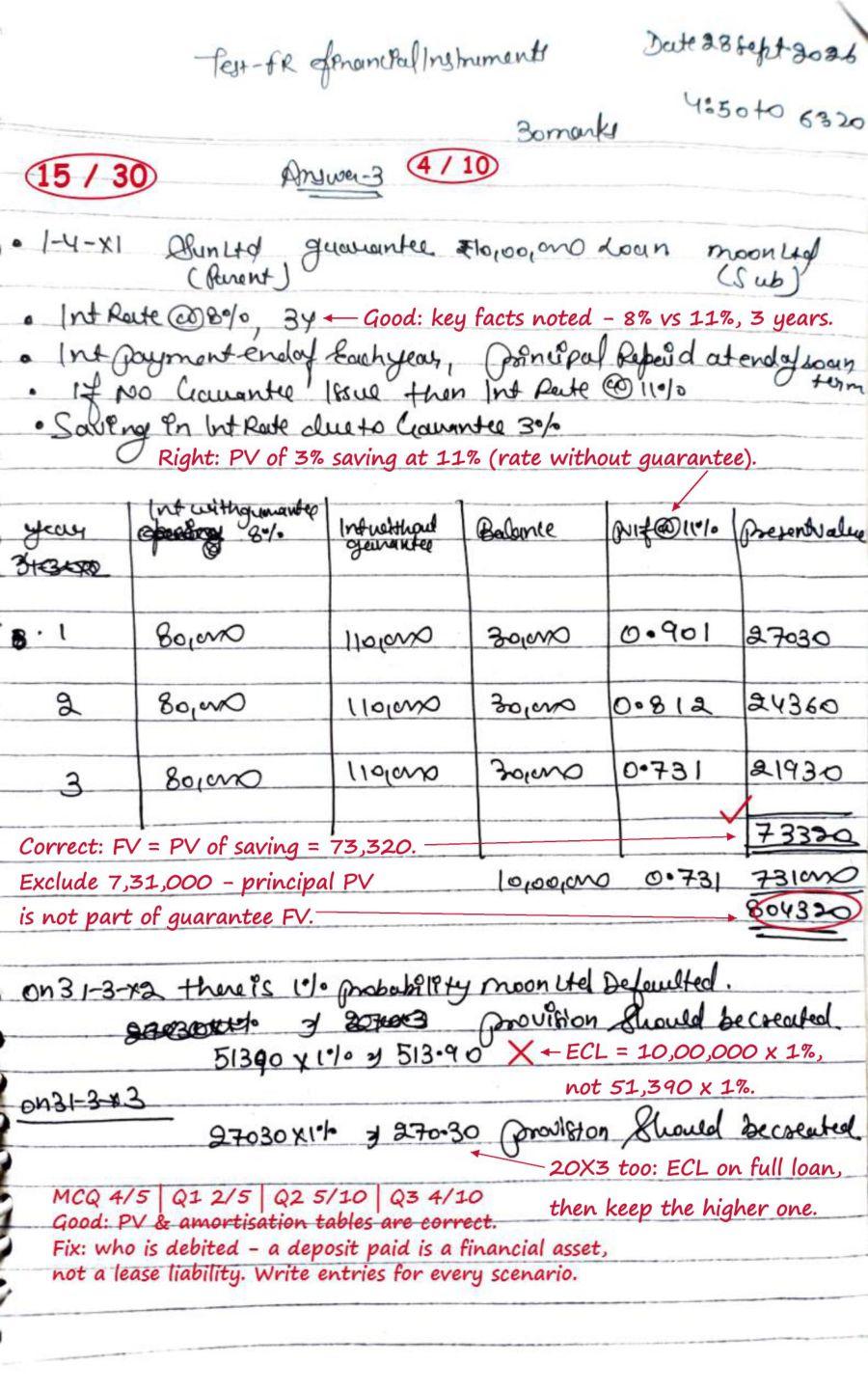
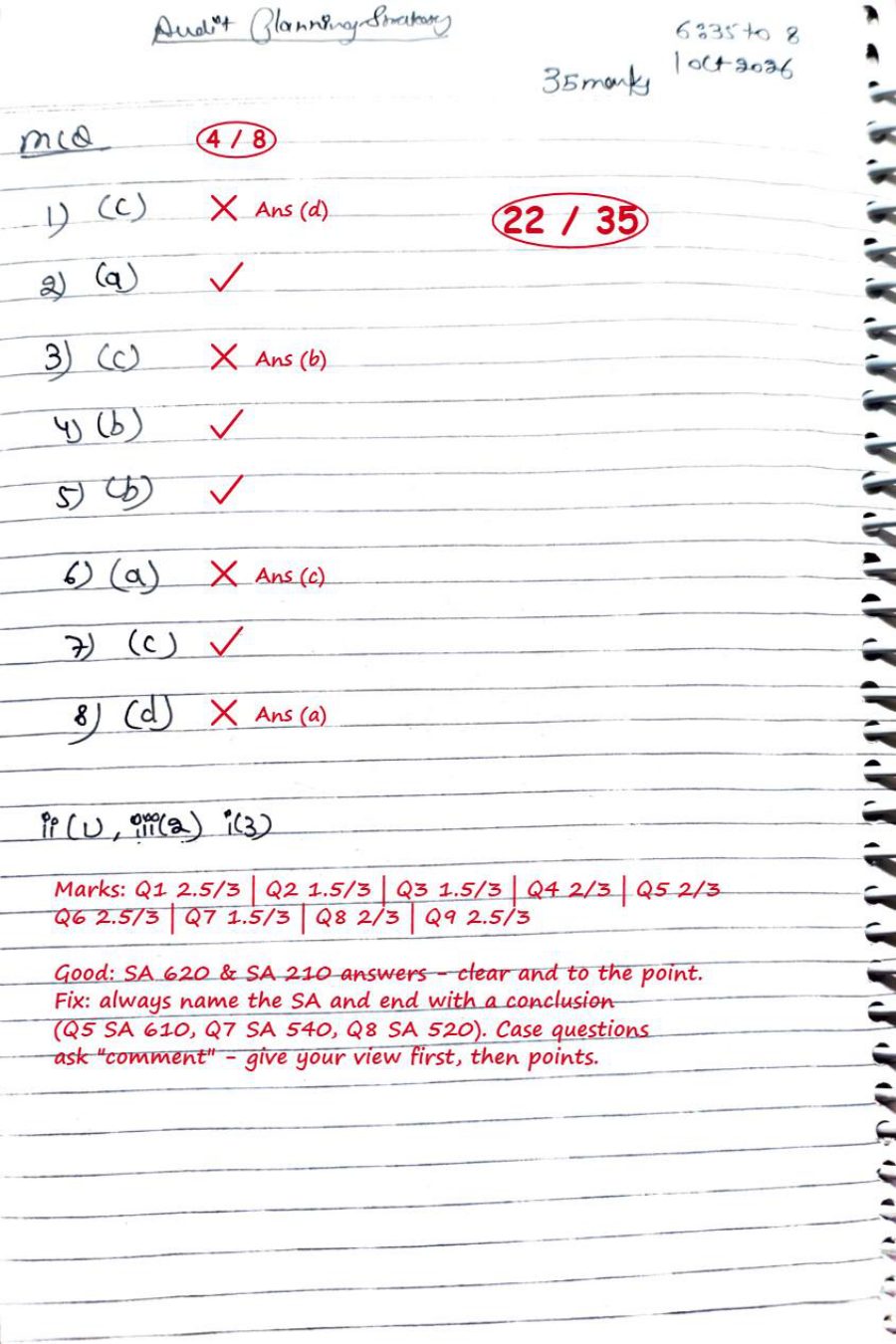
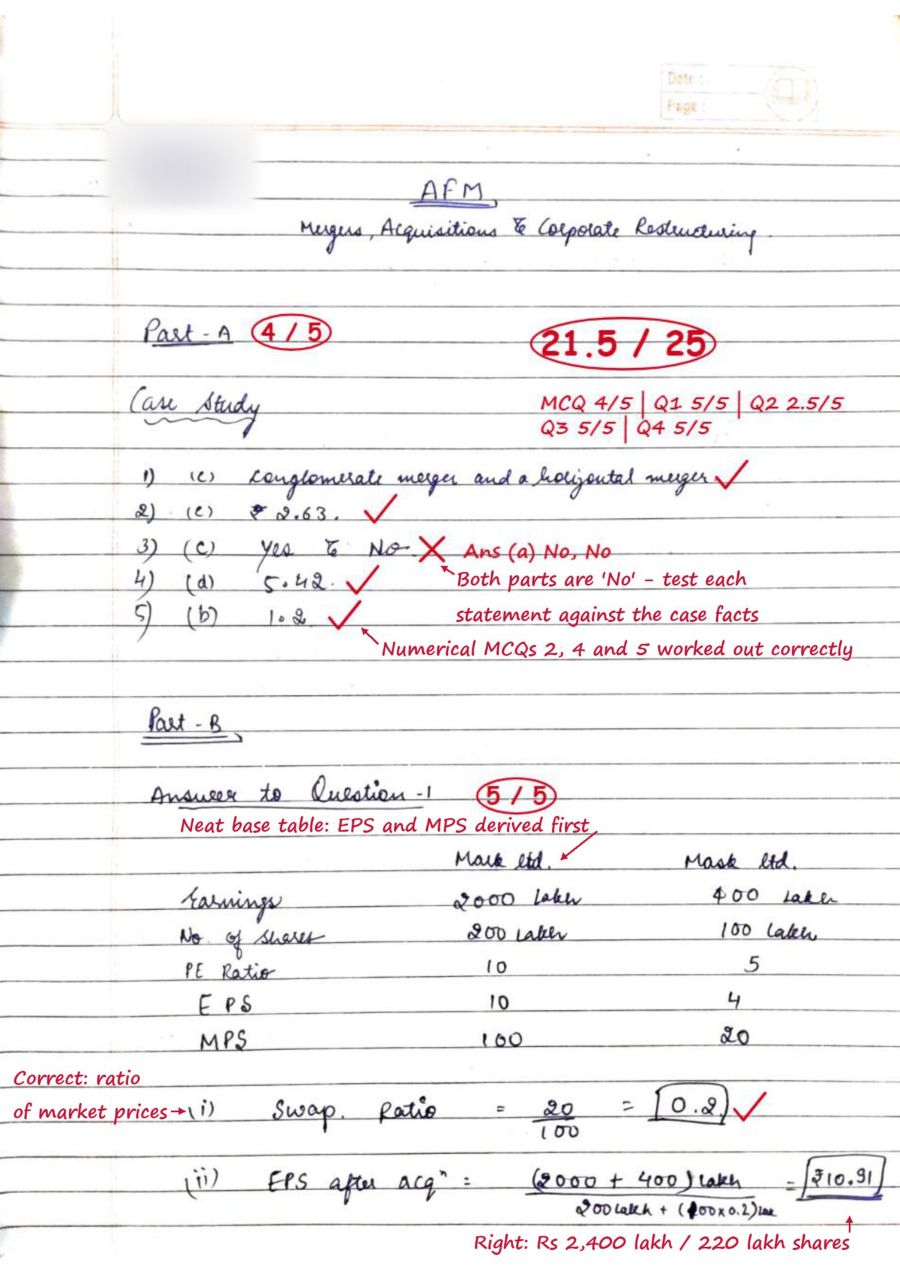
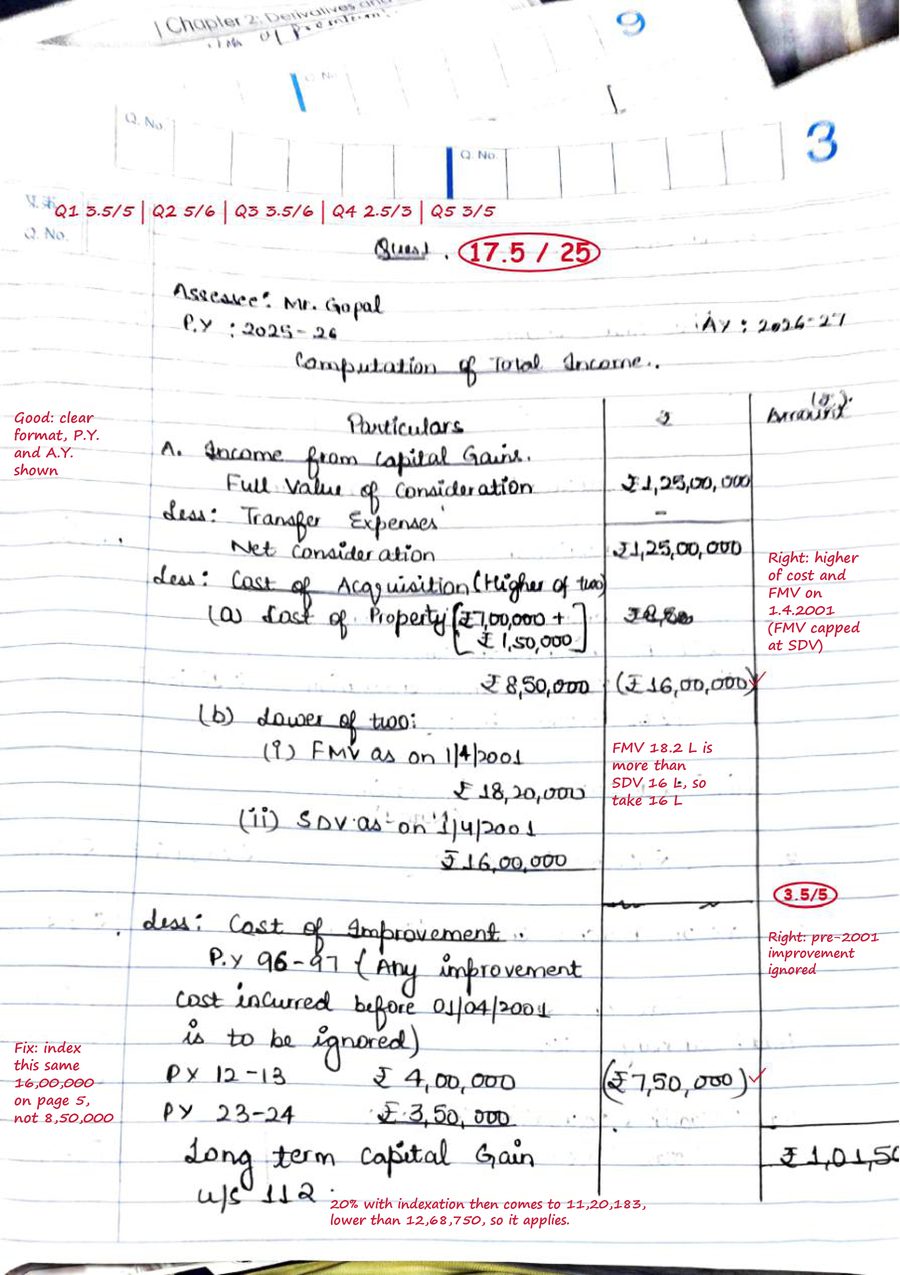
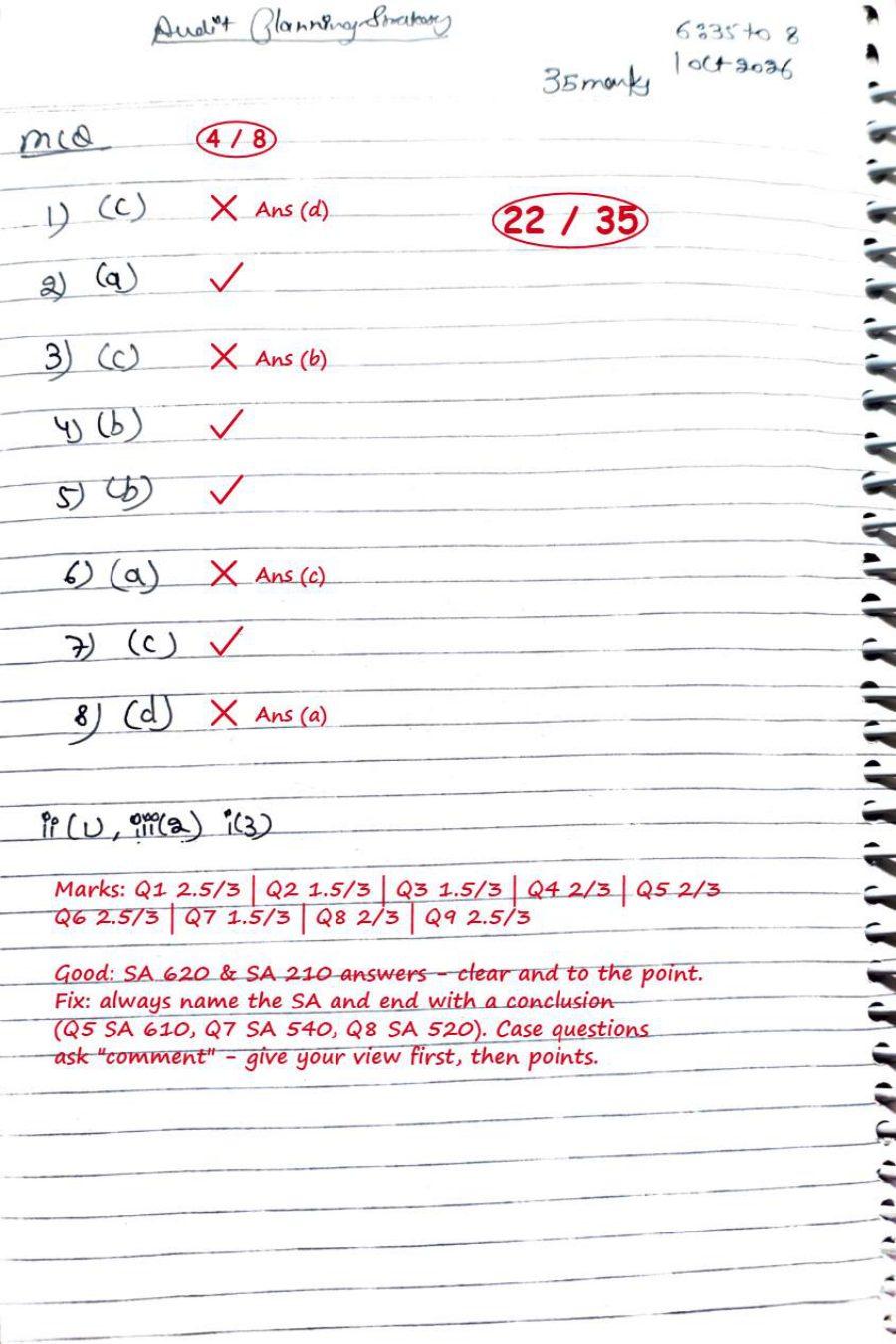
- Our faculty check your answers within 48 hours of upload. You get marks for each question and comments on what cost you marks.
- If you have doubts on your checked mock, our faculty answer them.
- On the Every Chapter Series + Mentor plan, a mentor builds a week-by-week plan to your sitting and reviews your mock results with you.
What happens to AA in September 2027?
June 2027 is the last sitting of the current AA exam. From September 2027 ACCA moves to a new structure, and AA maps to E3 Audit, Risk and Control. If you pass AA by June 2027, the pass carries across as credit.